

Introduction to Magnetic Science
An electrical signal lies behind our every thought and every action. Every single beat of our heart depends on the normal functioning of the electrical signals within our body. The continuous flow of electricity in our body establishes magnetic fields which can interact with magnetic fields of external origin.
Geomagnetic Fields
The word geo possesses Greek origin and is used to refer to the Earth. Geomagnetic is the term used to refer to the magnetic fields the Earth generates due to metals contained within the Earth’s crust, and this field is most often used to prevent dangerous solar rays from reaching and damaging the Earth. This field is necessary for the existence of life on Earth for this reason. We are constantly surrounded by the protective hug of the Earth’s magnetic field throughout our lives on Earth. Without it, we would not be able to live safely on this planet.
Biomagnetic Fields
Similar to how geomagnetic fields are used to refer to the magnetic field of the Earth, biomagnetic fields are used to refer to the magnetic fields produced by the human body, as stated before. Due to our much smaller size compared to Earth, these fields are tiny and undetectable without state-of-the-art, ultra sensitive equipment capable of drowning the background of Earth’s field.
As these biomagnetic fields are produced in response to electrical currents within the body, produced by fluctuations of chemicals and ions in the human body, it makes sense for there to be a clear-cut connection between the magnetic field and the chemistry of the body.
PEMF vs. EMF
While the Earth’s magnetic field is protective in nature, there are many other magnetic fields in our environment that can harm us. Knowing this, one might wonder what the difference between dangerous electromagnetic fields (EMF) and the pulsed electromagnetic fields (PEMF) used in devices like FlexPulse is.
These fields differ in categories such as duration of exposure, wavelength, and frequency of the field.
Magnetic Field Polarity
When considering the Earth’s magnetic field, there are two common terminologies we are familiar with, the North pole and the South pole. These standard terms refer to the magnetic dipoles of the Earth or a pair of oppositely charged poles separated by distance. This difference in charge of the poles determines the direction of the magnetic rays and cancels any net charge that could be generated.
When using pulsed magnetic fields, research has found that we do not need to consider polarity.
Introduction to Magnetic Field Therapy
As mentioned earlier, there is a clear cut relationship between magnetic fields and the chemistry and ions of the body. Magnetic fields can influence the direction of movement and concentration of different ions in the body. These movements can stimulate a wide range of effects on the body, be it physical or chemical.
PEMF devices use magnetic fields to produce voltages similar to those innately found in the body. These voltages can cause multiple changes in the body, whether it’s a muscle contraction, the firing of a neuron, or activation of specific cellular pathways.
Magnetic Field Types
There are two main types of magnetic fields, static or pulsed. The difference can be inferred from the names. Static fields have no discernible change in flux density or intensity across the duration of the measurement.
On the other hand, there are multiple flux densities and intensity changes across different frequencies in pulsed waves.
Cellular Communication
In essence, each of the cells in our body is a living thing in itself. It requires the same nutrients we do, but on a different scale. Some cells possess the ability to move. Others have complex functions like cellular ingestion or eating other cells. For the body to live as long as it does without any hitches, every cell must accomplish its tasks. These tasks require specific functions, whether energy generation, efficient waste removal, or growth and repair.
These functions depend on the cell membrane, which can be referred to as the primary communicator for the cell due to the multiple receptors or switches it possesses. The cell’s complexity can be illustrated through the massive amount of chemical processes, a whopping 7000.
Thanks to modern technology, understanding these processes and their coordination has become more accessible, allowing researchers to study how these processes might be influenced.
How Cells Grow and Divide
Cell growth and division require coordination among many cellular processes.
For whatever purpose a cell may see fit to divide (in response to a stimulus), the main processes involved are the same, whether it is growth or repair. Cellular contents need to be duplicated, mainly DNA. For DNA to be replicated, multiple proteins are involved, some to split and maintain the DNA strands and others to do the actual replication. For all these processes, some form of electrical energy is required.
Because magnetic fields can induce an electrical current, researchers are interested in whether PEMF can influence some of these processes. Most of this work is still at the laboratory stage.
Frequency, Intensity, and Waveform
Frequency
Frequency for a wave is measured in Hertz, or cycles per second, which has a relationship with wavelength. PEMF technologies usually operate at low frequencies, though some modalities use a higher frequency.
PEMF can operate at anywhere from frequencies of 1 to 10000 Hertz, and extremely low frequencies are considered to be anything less than 3000 Hertz.
Intensity
The intensity of a wave can be considered to be its strength. The higher the intensity, the greater the charge a wave can produce. Across PEMF devices, the intensity of a magnetic field can vary greatly. Some processes require more significant charges and others less.
The intensity of a wave is measured in Gauss for waves with higher intensity or microTesla for lower intensity waves.
Waveform
A waveform refers to the general shape of movement of the particles in the wave. The number of waveforms in a second could also be called the frequency, explained earlier.
Some of the shapes present in nature include sinusoidal, sawtooth, and square waves. Besides these, many other shapes are used in PEMF modalities.
The shape of the wave is essential due to the ability to superimpose one wave onto another, hence enhancing the net intensity of the wave and consequently the charge produced.
Another feature of waveforms is the intensity innately tied to the shape. Square waves innately have higher intensities with respect to a similar sinusoidal wave.
Research Limitation
Despite the amount of research done and literature present on the use of magnetic fields in relevance to medical procedures, it has been hard to transfer these principles into practical use, whether at home or in a clinic. On a basic level, it requires much expertise from professionals both in the technical and medical fields.
The research conducted and ones being conducted at this moment are very important, especially when combined with the experience of people using PEMF in their everyday life, whether at home or in a professional care setting. Only through proper coordination between these two factors can these modalities be used to their full potential.
Acute vs. Chronic Conditions
Acute and chronic are two terms extensively used in the medical community to refer to the time duration of an illness or symptom. Acute refers to any discomfort felt for less than three months, while chronic discomfort has gone on for longer than that.
Researchers have studied PEMF in both acute pain (for example, after surgery) and chronic pain (for example, knee osteoarthritis and lower back pain). Results vary by condition and study: some reviews report short-term improvements, while others find no clear advantage over placebo, and most trials are small.
Everyday Use
Our body is in a constant balance of cell death and growth. Cells are being changed daily as they outlive their potential and are replaced by newer cells, younger and more efficient than their older counterparts. The maintenance of this cycle is necessary for our daily functioning.
Many people use PEMF as part of a daily wellness routine, alongside regular exercise and a balanced diet.

How to Apply PEMFs
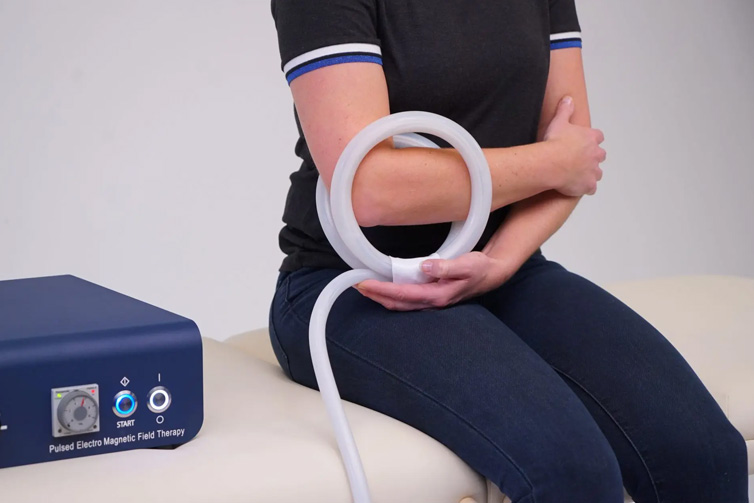
Depending on the PEMF, there are multiple uses and guidelines for use. Some PEMFs are to be used at home while others are in a clinical setting. Some PEMFs cover the body in its entirety, and others are focused on specific areas of the body.
Despite these differences, the main application of a PEMF is fairly simple and the same across devices. You can simply turn the device on and use it to apply the field to your body. To achieve proper contact levels, it’s best to lie down on a mat and keep the position of the device stable. The average duration for the application of devices is around half an hour, and it is done twice a day.
Building a Routine
People are often curious about how long and how often to use a device. This depends on the device and how you use it, and the device instructions or a PEMF practitioner can help set expectations.
Everyone is different, and a routine can be fine-tuned over time.
Contraindications
There are few absolute contraindications to PEMF therapy. One of the most notable contraindications is applying a PEMF device over any electrical device implanted in a body, as the current developed by the magnetic field can alter the functioning of these devices, whether they are pacemakers or cochlear hearing aids.
A disease of the thyroid organ, Grave’s disease, should be treated with caution when using a PEMF, as well as any active bleeding. Safety in pregnant women has yet to be fully proven, although there are no reports of harm.
Other patients who should use PEMF with caution are people with any metal implant in their body, whether it’s dental implants, an artificial heart valve, or a metal rod following a bone fracture.
Adverse Reactions
There have been some reports of mild adverse effects of PEMF therapy when done at home. All major PEMF providers should acknowledge these. Due to the mass effect of the usage of PEMF, it is not a strange occurrence for there to be a negative effect somewhere in the body. PEMF affects multiple organ systems at once, and not just the organ system you are targeting. Due to this high range and low specificity, there is no cause for concern if a patient experiences mild adverse effects on use, though the chance for this decreases with more specific PEMF devices. However, if someone experiences some significant adverse effects, they should be reported immediately.