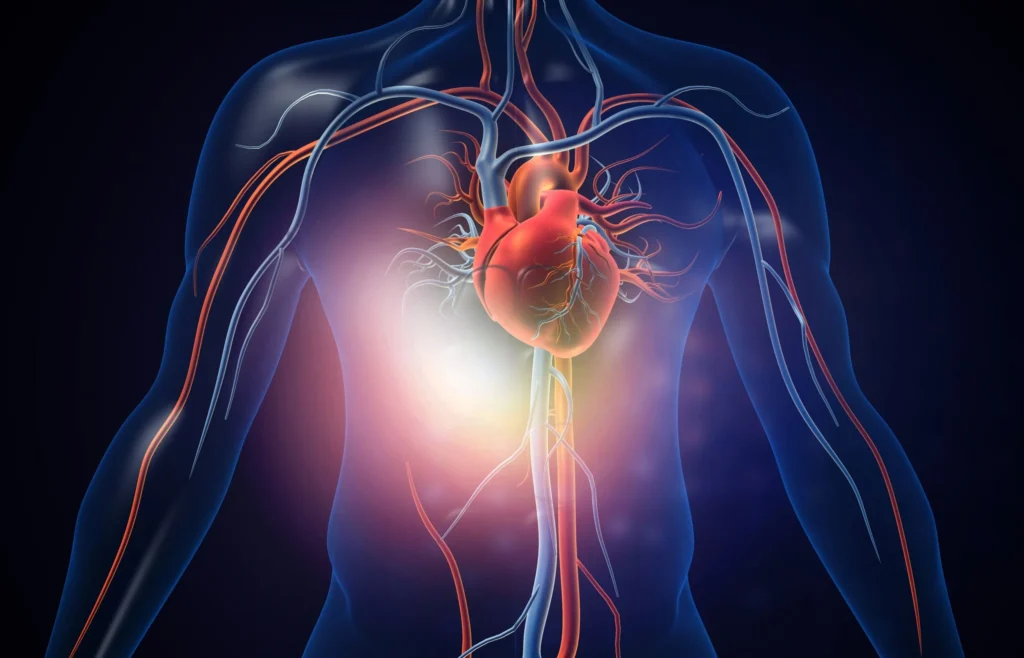
Optimal circulation keeps your body healthy and functioning properly. When your circulation system is working as it should, blood, nutrients, and oxygen efficiently move to where they are needed. If blood flow and circulation are impaired, you may begin to notice uncomfortable symptoms.
Researchers have studied whether PEMF affects blood flow. The studies so far are small, many were done in animals or healthy volunteers, and the results are mixed.
Signs of Poor Circulation
Because poor circulation can ultimately lead to much more serious health conditions such as heart attacks, stroke, gangrene, and poor wound healing, among others, it’s important to recognize the signs of reduced circulation.
Some of the most common symptoms, depending on where it happens, include numbness or pain in extremities, exhaustion, vertigo, atypical headaches, sensitivity to cold, swelling, dry and flaky skin, hair loss, and shortness of breath. While all of these symptoms can be the result of other factors, poor circulation should be considered. If you notice these symptoms, see your doctor to find the cause.
Lack of physical activity, smoking, and poor eating habits are a few lifestyle choices that can have a direct impact on the quality of your blood circulation. Changing some of these habits is a good place to start.
How PEMFs Might Affect Blood Flow
Researchers have proposed several ways PEMFs might affect blood flow, including widening of blood vessels (dilation), changes in how sticky platelets are, changes in how easily red blood cells move through capillaries, and changes in blood thickness (viscosity). These ideas are still being tested.
Dilation is important to healthy circulation because when blood vessels are wider, blood flows more smoothly. When blood vessel cells are healthy, blood vessels produce nitric oxide better. The endothelium, which is the inner lining of the blood vessel, uses that nitric oxide to let the muscles in the blood vessel wall know they can relax, which allows the vessel to open up. This increases blood flow, decreasing both blood pressure and heart rate. Researchers have looked at whether PEMFs affect nitric oxide.
Viscosity or “thickness” of the blood can be a problem both where the injury occurs and systemically. When inflammation increases, viscosity also increases due to increased fibrinogen, C-reactive protein, clumping of platelets, and higher protein content in the vascular and extravascular areas.
Higher viscosity can impair the delivery of nutrition, hormones, and other needed chemicals to local tissues, exacerbate inflammation, and increase the likelihood that clots or thrombosis will develop. Clots and thrombosis can each lead to major issues such as stroke, heart attack, and pulmonary embolism.
Improved circulation helps your body deliver nutrients where they’re needed, repairs molecules, increases oxygen, eliminates waste, and stimulates growth factors, among other vital processes.
What studies have found
Research on PEMF and blood flow is limited, and a 2007 literature review described the data as limited and contradictory. Here are some individual studies:
One 2018 pilot study using rats investigated the effect of PEMFs on blood circulation in an ischemic skin model measured with laser-speckle contrast-imaging. Researchers found that in certain blood vessels in the PEMF group, blood flow increases more than in the initial condition, leading them to conclude that, in this rat model, PEMF at a frequency of 1 Hz and intensity of 10 mT (100 Gauss) improves blood circulation (Lee, et al).
In another study, researchers found that PEMF stimulation in rat brains significantly dilated cerebral arterioles, increased volume of blood flow, and increased tissue oxygenation. In other work looking at blood flow, after thirty minutes of PEMF, the increase lasted for at least three hours. (Bragin, et al).
A study in healthy humans volunteers demonstrated that a hand-held, low-frequency device increased blood flow in the hand significantly and this impact lasted for several minutes before gradually disappearing (Funk et al).
Finally, a study used thermography, a standard tool for assessing circulation, to detect the impact of PEMF therapy on circulation. At the skin, the intensity of the PEMF was 7000 Gauss (0.7 T). It was applied at a pulse rate of 1 per second for ten minutes in healthy individuals, using their own limbs as controls. The thermogram images clearly showed a significant increase in circulation between parts of the body stimulated with PEMF and those that were not. (Sook).
Not every study agrees. In a 2020 study of 15 healthy volunteers, blood flow rose in both the PEMF leg and the untreated leg, with no difference between them. These are small studies, mostly in animals or healthy volunteers, and none used FlexPulse.
Using a portable PEMF device
PEMF therapy can be delivered in clinical settings or at home. Devices range from full body mats to smaller, more portable units that can be used anywhere, such as the FlexPulse devices.
The FlexPulse G2 PEMF is lightweight and portable, so you can use it on any part of the body, anytime, anywhere. It offers ten programs ranging from 3 Hz to 1000 Hz.
Contact our team for more information or to purchase a FlexPulse G2 PEMF therapy device today!
References
Bragin, D. E., Statom, G., Nemoto, E. M. Stroke. Vol. 44, 2018. Suppl-1. Pulsed Electromagnetic Field (PEMF) Increases Microvascular Flow And Tissue Oxygenation In the Normal Rat Brain.
Funk, R. H., Knels, L., Augstein, A., Marquetant, R., & Dertinger, H. F. (2014). Potent stimulation of blood flow in fingers of volunteers after local short-term treatment with low-frequency magnetic fields from a novel device. Evidence-based complementary and alternative medicine : eCAM, 2014, 543564. https://doi.org/10.1155/2014/543564
Lee, N., Park, J., Choi, Y. Kim, J., Jung, B. & Lee, Y. (2018) Effect of pulsed electromagnetic fields on the blood circulation in ischemic skin models: A pilot study, Electromagnetic Biology and Medicine, 37:4, 202-207, DOI: 10.1080/15368378.2018.1523798
Sook, L. ee Hyun. (October 2011) Effect of Pulse Magnetic Field Stimulus on Blood Flow using Digital Infrared Thermal Imaging. Lee Hyun Sook. J Korean Magnetics Society, 21 (5), 180-184.