In addition to Beta, Alpha, Theta and Delta brainwave patterns, neuroscience has more recently been doing extensive evaluation of gamma waves, often called gamma brain oscillations (GBOs). These are all important for optimal brain function.
Gamma waves are specific patterns of electrical activity in the brain that occur at frequencies between 30-100 Hz. The 40 Hz frequency point generates the most interest. Gamma has long been the term used to describe oscillations of brain activity higher than 30 Hz, with frequencies typically ranging from 30 Hz to 80 Hz. More recently, a “high-gamma” label has been applied to frequencies between 80 Hz and 200 Hz. Gamma and high-gamma activity can occur simultaneously in the brain.
What impact do gamma waves have on cognition?
Gamma brainwaves are required to process information in different areas of the brain, particularly in the higher-level tasks needed for cognitive functioning, learning, memory and the processing of information by the brain. Gamma waves are associated with sensory perception, memory formation, and voluntary movement.
There is an optimal range for gamma activity, which leads to better focus, attention, sensory processing, cognition, information processing, learning, perception and REM sleep. With too little gamma activity, problems such as ADHD, depression and learning disabilities result. Too much gamma activity can lead to anxiety, stress, and hyperarousal.
Low-frequency brainwaves have been associated with a slowing of the brain. Cognitive impairment occurs when large areas of neurons are not integrated properly in the brain. It is the complex cognitive function that leads to attention, memory, grouping constantly changing thoughts and processes, and awareness requires this integration to make sense to the brain. This integration is facilitated by gamma activity.
External sensory input is constant, prompting competition among neural reaction events for “representation and perception.” The brain must select and process relevant information to most efficiently use its processing resources. Gamma oscillations are stimulated by this sensory input, typically ranging from 40 Hz to 100 Hz, that aid in the processing of the barrage of sensory information.
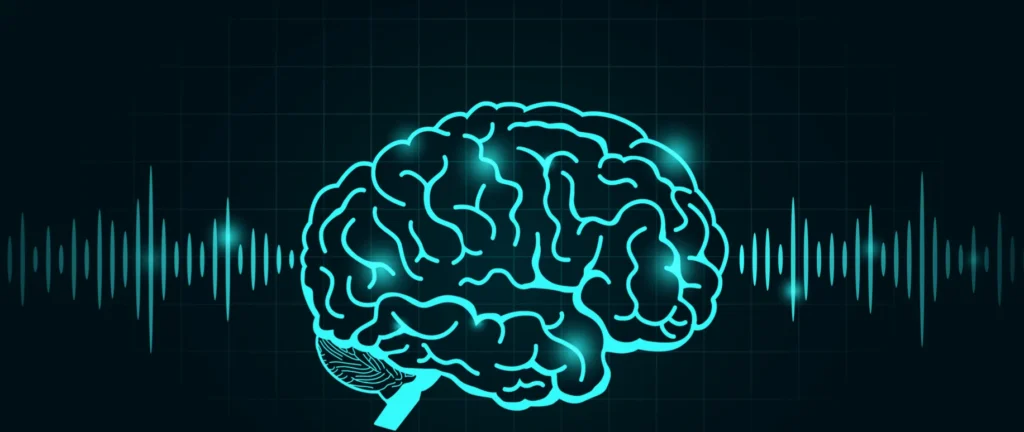
Gamma rhythms are widespread both while awake and when in a dream state. Magneto-encephalograms (MEGs), which are very sensitive recordings of magnetic activity in the brain, suggest that these rhythms may sweep the entire brain, binding together multiple perceptions into a single cognitive experience.
What does research say about PEMF and gamma activity?
Researchers are studying whether magnetic stimulation at an appropriate frequency can help synchronize neuron firing throughout the brain. This synchronization is important for integrating nerve signals and for neuroplasticity.
The amount of gamma production, as well as synchronization of signals, impact attention. With higher gamma production and better synchronization, attention becomes stronger. The basal forebrain, which is located at the bottom part of the front of the brain, provides vital input for both attention and gamma activity. Acetylcholine, which is important in controlling behavior and, also, critical to memory, is produced in the basal forebrain. Damage in this area is evident in dementia associated with both Alzheimer’s disease and Parkinson’s disease. Researchers have looked at whether magnetic stimulation over the temples can increase gamma activity in this area, but this research is still early.
Applying adequate specific stimulation to the brain can create entrainment – the natural synchronization of brainwaves. Research has shown that entrainment is more noticeable during gamma stimulation than with other frequency brainwave patterns in the thalamus. So, entrainment with gamma frequencies seems to be easier than entrainment with other brainwave frequencies.
How is PEMF therapy different than other entrainment stimuli?
There have been many stimuli used for entrainment, most commonly audiovisual, pulsing lights, sound, and transcranial electrical stimulation. PEMFs differ from some of these other forms of stimulation: they can target specific areas of the brain and pass through the entire brain.
PEMFs pass through the brain entirely, a major difference from other approaches. Other entrainment approaches are absorbed by the brain, which can produce harmful heating effects. They also produce indirect effects through interactions with the nervous system, probably accounting for a large part of their actions. PEMFs, on the other hand, can be more directly controlled and targeted to act on the brain.
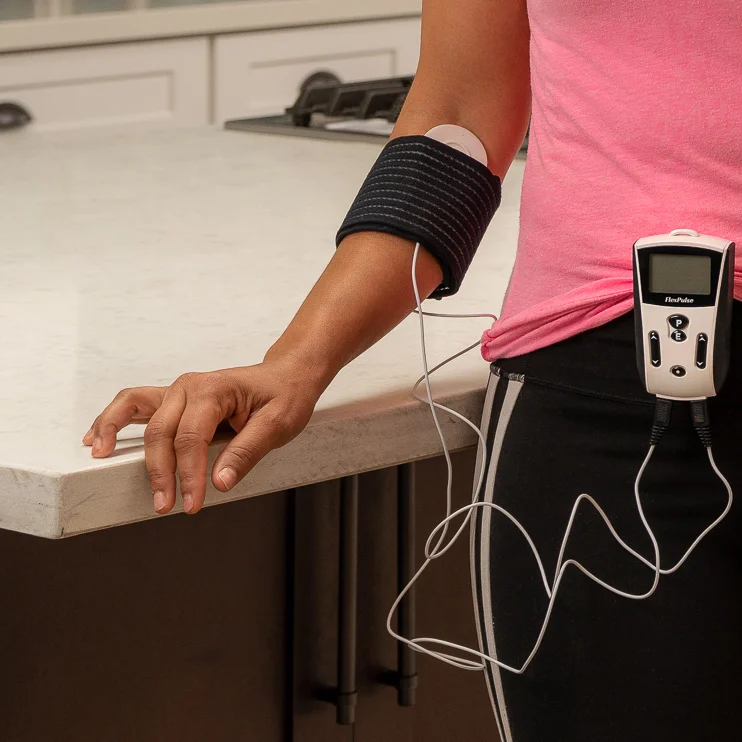
A flexible PEMF device
FlexPulse just launched a PEMF device called the G2 with four new programs available. These new programs will allow for even broader use of the FlexPulse PEMF device for brain stimulation. Neural stimulation is a major emphasis of the FlexPulse programs.
The range of programs offered in the FlexPulse device allows users to choose the frequency that matches a specific brainwave frequency band. The frequencies used in these programs have been chosen primarily to match these brainwave frequency bands.
FlexPulse systems have been developed based on more than 3 decades of research and thousands of studies. Other entrainment methods can be prohibitively expensive and require hours of time spent in a clinical setting. With a FlexPulse system, a session can take just 30 minutes before bed, or the battery-powered device can run overnight.
The portable FlexPulse device is easy to use wherever you are. The value of owning a PEMF device increases when it is shared by multiple family members, and the G2 offers a wide range of programs to choose from.
The FlexPulse comes with a 30-day satisfaction guarantee and a 2-year warranty on the controller.